

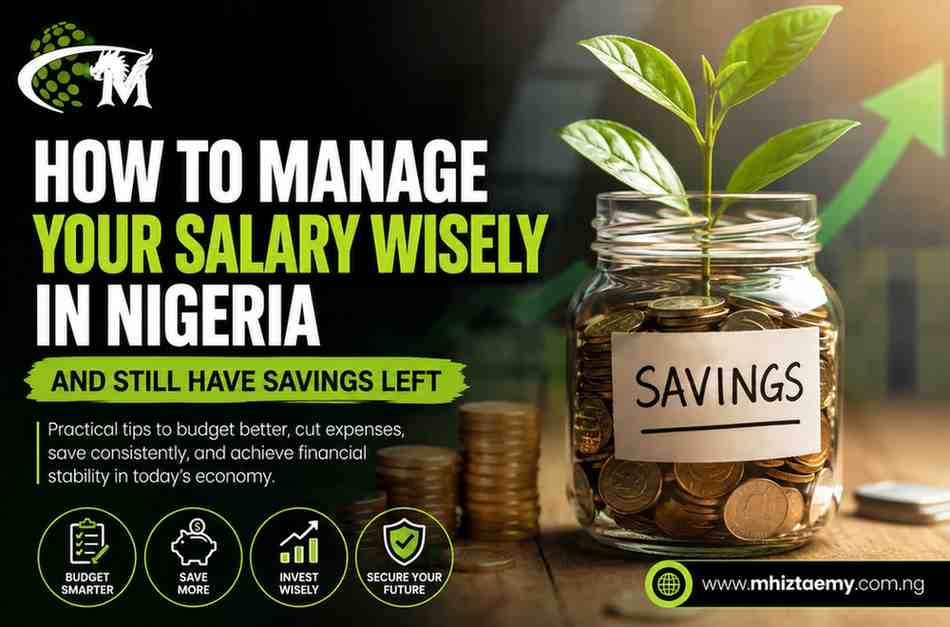
Salary day feels exciting until reality arrives a few days later. Bills begin piling up, transport costs increase unexpectedly, food prices rise again, and before the month reaches the middle, many Nigerians are already calculating how to survive until the next alert.
The frustrating part is that this cycle affects both low-income and decent-income earners. Some people earning over ₦300,000 monthly still struggle financially, while others earning less somehow maintain savings consistently. Income helps, but money management habits usually decide what remains at the end of the month.
Living comfortably in Nigeria’s current economy requires more intentional spending than ever before. Without structure, even a good salary can disappear quickly.
In this article, MhiztaEmy will explain practical ways to manage your salary wisely, reduce unnecessary expenses, build better financial habits, and increase your chances of having money left before the next payday.
Whether you are a civil servant, private-sector employee, freelancer with a fixed monthly income, or a young professional trying to improve your finances, these strategies can help you gain better control over your money.
1. Stop Treating Your Entire Salary Like Spending Money
Many people receive salary alerts and immediately begin spending without separating important categories first. Once money enters the account, every expense suddenly feels justified.
Financial discipline becomes easier when salary is divided immediately. Rent, feeding, transportation, savings, bills, investments, and emergency funds should already have assigned portions before random spending begins.
People who budget after spending usually end up reacting emotionally instead of making controlled decisions.
Related Posts
- How to Build Multiple Streams of Income in Nigeria and Achieve Financial Stability
- 7 Costly Money Habits Keeping Many Nigerians Broke (And How to Change Them Before It’s Too Late)
- The Best Way to Use Debt to Create Wealth: 7 Smart Borrowing Secrets That Can Grow Your Income
- How to Stop Living From Salary to Salary: 12 Smart Ways to Take Control of Your Money
- How to Protect Your Money From Inflation in Nigeria: 11 Smart Strategies That Still Work
- How to Avoid Unnecessary Bank Charges and Save More Money in Nigeria: 15 Smart Ways to Keep More of Your Hard-Earned Money
- How to Create a Monthly Budget That Actually Works in Nigeria
- How Nigerians Are Surviving the High Cost of Living Without Going Broke
Creating a simple monthly budget can make a significant difference because it gives every naira a purpose before expenses start appearing.
2. Save Before Spending Anything Else
Saving what remains after expenses rarely works because something always comes up unexpectedly. Nigerians dealing with inflation already know how quickly emergencies appear.
Moving savings immediately after salary arrives creates stronger discipline. Even small amounts saved consistently become meaningful over time.
Several digital banking apps now allow automated savings transfers, making the process easier for salary earners trying to avoid temptation.
The secret is consistency. Small monthly contributions often grow into substantial amounts when maintained for long periods.
3. Your Rent Should Not Destroy Your Entire Income
Housing pressure is becoming intense in cities like Lagos, Port Harcourt, and Abuja. Many workers spend huge percentages of income on apartments mainly because of status or convenience.
Living above your financial comfort zone creates pressure every month. Expensive rent often leaves little room for savings, investments, or emergencies.
Some financially disciplined Nigerians intentionally choose modest apartments temporarily while building stronger financial stability first.
Affordable housing decisions today can create more financial freedom tomorrow.
4. Food Spending Requires Better Planning
Random food spending quietly drains salaries faster than expected. Frequent restaurant visits, expensive snacks, impulse supermarket purchases, and daily food delivery habits consume huge amounts monthly.
Meal planning reduces waste significantly. Bulk buying food items also helps many Nigerian households control expenses better.
Cooking more meals at home may not look glamorous online, but it protects finances far more effectively than constant eating out.
Simple adjustments to food spending can save thousands of naira every month without reducing quality of life.
5. Transportation Costs Need Attention Too
Transport fares continue rising across Nigeria. Workers commuting daily often underestimate how much transport consumes monthly until they calculate it carefully.
Combining trips, reducing unnecessary movement, using public transport strategically, or relocating closer to work can reduce pressure considerably.
Ride-hailing apps remain useful occasionally, but daily dependence on them can quietly destroy monthly budgets.
Tracking transportation expenses can reveal surprising opportunities to cut costs.
6. Avoid Lifestyle Competition Completely
Social media has increased financial pressure heavily among young Nigerians. People now feel forced to maintain appearances online regardless of their actual financial condition.
Expensive gadgets, luxury outings, designer clothes, and unnecessary spending often happen because people want validation from others.
Financial peace usually comes faster when spending decisions stop depending on public approval. Quiet financial growth creates more stability than temporary attention.
Building wealth privately is often more rewarding than displaying temporary success publicly.
7. Side Hustles Can Protect Your Salary
One income source feels increasingly risky in Nigeria’s economy. Inflation alone already reduces purchasing power constantly.
Many salary earners now depend on side hustles for extra stability. Freelancing, graphic design, online tutoring, social media management, affiliate marketing, photography, POS business, and content creation are helping thousands of Nigerians earn additional income.
Extra income creates breathing space and reduces dependence on salary alone for survival.
Even a modest side income can improve monthly cash flow and accelerate financial goals.
8. Emergency Funds Prevent Financial Panic
Unexpected expenses arrive constantly in Nigeria. Medical bills, family emergencies, sudden repairs, electricity problems, and job uncertainty can create instant pressure.
People without emergency savings often end up borrowing money repeatedly whenever problems appear. Debt then creates even more pressure during future salary cycles.
Even small emergency funds improve financial confidence greatly because they reduce panic during difficult moments.
Financial security often begins with being prepared for unexpected situations.
9. Subscription Spending Is Becoming Dangerous
Auto-renewals now remove money silently from many Nigerian accounts every month. Streaming services, betting apps, gaming subscriptions, cloud storage, and unused digital tools often continue charging long after people stop using them regularly.
Reviewing subscriptions monthly helps identify waste quickly. Canceling unnecessary renewals frees up money for savings or more important expenses.
Tiny recurring charges become surprisingly expensive over time.
A few minutes spent reviewing your subscriptions can save a meaningful amount annually.
10. Learn to Delay Certain Purchases
Not every desire deserves immediate spending. Many impulse purchases lose excitement within days, but the financial damage remains longer.
Financially disciplined people often wait before making expensive purchases. Delaying spending creates room for better thinking and reduces emotional buying decisions.
Patience protects income more effectively than most people realize.
Giving yourself time before buying often helps separate genuine needs from temporary wants.
11. Financial Stability Requires Consistency More Than Motivation
Motivation disappears quickly after a few difficult weeks. Habits usually determine financial outcomes more than temporary excitement.
Small disciplined actions repeated monthly create stronger long-term results than occasional aggressive budgeting followed by reckless spending.
A salary managed carefully over several years can completely change somebody’s financial future, even without becoming extremely wealthy immediately.
The people who achieve financial stability are usually not the ones earning the most money. They are often the ones who consistently make smarter decisions with the income they already have.
Conclusion
Managing your salary wisely in Nigeria is no longer optional; it is becoming a necessity. Rising living costs, inflation, and unexpected expenses make financial discipline more important than ever.
The good news is that building savings does not always require earning a huge salary. In many cases, it starts with creating better habits, controlling unnecessary spending, planning ahead, and remaining consistent month after month.
By applying these practical strategies, you can reduce financial stress, improve your money management skills, and increase the chances of having savings left long before your next salary alert arrives.
Frequently Asked Questions
How much of my salary should I save every month?
A common recommendation is to save at least 10% to 20% of your monthly income. However, the most important thing is maintaining consistency regardless of the amount.
What is the biggest mistake salary earners make?
Many people spend first and save later. This often leaves little or nothing available for savings at the end of the month.
Is it possible to save money on a low salary in Nigeria?
Yes. While it may be challenging, budgeting properly, reducing unnecessary expenses, and saving consistently can help even low-income earners build savings gradually.
Why is budgeting important?
Budgeting helps you control spending, prioritize important expenses, and ensure your income is used more effectively throughout the month.
Should I have an emergency fund?
Yes. An emergency fund helps cover unexpected expenses without forcing you into debt or financial panic.
To Read more on Finance guide click www.mhiztaemy.com.ng
