

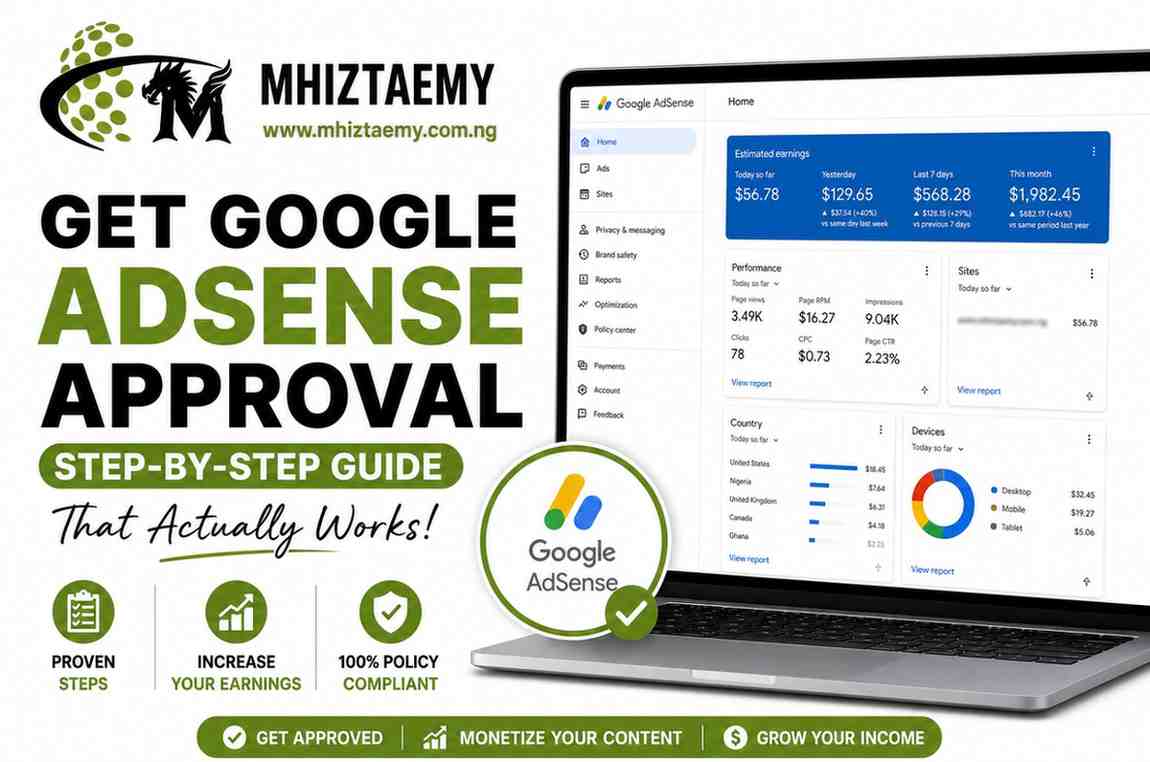
Getting approved by Google AdSense can seem difficult, but if you follow the right process, your chances of approval increase significantly.
In this guide, mhiztaemy will walk you through the exact steps needed to build a professional website, create valuable content, meet Google’s requirements, and improve your chances of getting approved faster. Whether you’re a new blogger or someone whose application was previously rejected, this guide will help you avoid common mistakes and move forward with confidence.
Many website owners rush the application process and get rejected because their sites are not fully prepared. By following the steps below, you can create a website that not only meets AdSense requirements but also provides a better experience for your visitors.
Step 1: Create a Professional Website or Blog
Before applying for AdSense, you need a website with:
-
A custom domain name (e.g., yourwebsite.com)
-
Clean and mobile-friendly design
-
Easy navigation
-
Fast loading speed
Related Posts
- 7 Best Hosting Platforms for Beginners in 2026: Fast, Affordable & Easy to Use
- How to Start a Blog and Make Money: A Step-by-Step Guide for Beginners
- Shared Hosting vs VPS vs Cloud vs Managed Hosting: Which Hosting Plan Gives Better Speed, Security, and Value in 2026?
- How to Start a Blog and Make Money in 2026: A Beginner’s Roadmap to Building a Profitable Online Income Stream
-
SSL certificate (HTTPS enabled)
Recommended Platforms:
-
WordPress
-
Blogger
-
Wix
A professional-looking website creates trust and improves user experience. First impressions matter, and a well-structured website increases the likelihood of approval.
Step 2: Choose a Clear Niche
Focus on one main topic, such as:
-
Education
-
Technology
-
Health
-
Finance
-
Blogging Tips
-
Scholarships
-
University Admissions
-
Career Advice
A focused niche helps search engines understand your website better.
When your content revolves around a specific topic, visitors are more likely to stay longer, explore additional pages, and return in the future.
Step 3: Publish High-Quality Content
This is the most important step.
Aim for:
-
15–30 original articles
-
At least 800–1,500 words per article
-
Helpful and well-structured content
-
No copied or low-quality content
Include:
-
Headings (H2, H3)
-
Images where necessary
-
Internal links
-
Proper grammar
Google wants content that provides real value to visitors.
In addition, ensure that every article solves a specific problem or answers a question that your audience is searching for. Detailed and informative content often performs better in search results and improves visitor engagement.
Step 4: Create Essential Pages
Your website should have these pages before applying:
About Us
Tell visitors who you are and what your website offers.
Contact Us
Include:
-
Contact form
-
Email address
Privacy Policy
Explain how visitor data is collected and used.
Disclaimer
Important for blogs that provide educational, financial, or informational content.
Terms and Conditions
Optional but recommended.
These pages help establish trust and demonstrate that your website is operated professionally.
Step 5: Remove Empty Pages
Check your website for:
-
Under-construction pages
-
Empty categories
-
Broken links
-
Sample posts
Everything should look complete and professional.
Before applying, browse your website as if you were a first-time visitor. Fix anything that appears unfinished or confusing.
Step 6: Ensure Your Site Has Organic Traffic
While AdSense does not require a specific traffic amount, some visitor activity helps.
Get traffic through:
-
SEO
-
Social media
-
Pinterest
-
Facebook
-
X (Twitter)
-
WhatsApp sharing
Avoid buying traffic.
Organic visitors are generally more engaged and provide positive signals that your website is attracting genuine interest.
Step 7: Check AdSense Policy Compliance
Read the official AdSense policies carefully.
Avoid:
-
Copyright infringement
-
Adult content
-
Gambling content
-
Hacked content
-
Misleading information
-
Excessive pop-ups
Policy violations are among the most common reasons applications are rejected. Reviewing your content carefully before submission can save valuable time.
Step 8: Improve User Experience
Before applying:
- Mobile responsive design
- Fast loading speed
- Easy navigation
- No excessive ads
- Readable fonts
- Proper spacing
A good user experience encourages visitors to stay longer, explore more content, and interact positively with your website.
Step 9: Connect Your Site to Google Services
Set up:
These help monitor performance and show that your site is properly managed.
They also provide useful insights into visitor behavior, indexing status, and website growth opportunities.
Step 10: Apply for AdSense
-
Visit Google AdSense.
-
Click Get Started.
-
Add your website URL.
-
Enter your details.
-
Submit your application.
-
Add the AdSense verification code to your website.
-
Wait for review.
Double-check your website before submitting. A final review can help you catch issues that may affect approval.
Step 11: Monitor the Review Process
Approval usually takes a few days, but sometimes longer.
During review:
-
Keep publishing content
-
Do not make major site changes
-
Ensure your site stays online
Consistency shows that your website is active and being maintained regularly.
Common Reasons for AdSense Rejection
Many websites are rejected because of:
- Thin content
- Too few articles
- Copyright violations
- Poor navigation
- Missing Privacy Policy page
- Low-value content
- Site not fully developed
- Invalid traffic sources
Understanding these issues beforehand can help you avoid unnecessary delays and improve your chances of approval.
AdSense Approval Checklist
Before applying, make sure you have:
- Custom domain
- HTTPS enabled
- 20+ quality articles
- About Us page
- Contact Us page
- Privacy Policy page
- Mobile-friendly design
- Search Console connected
- Original content
- Good user experience
Use this checklist as a final review before submitting your application.
Best Practice for New Bloggers
A good target is:
-
20–30 high-quality posts
-
At least 1 month of active blogging
-
Proper legal pages
-
Some organic traffic from search engines
Patience is important. Building a quality website takes time, but the long-term rewards are worth the effort.
Conclusion
For the best chance of approval, focus on building a useful website with original content and a professional appearance. A good target for new bloggers is to publish at least 20–30 high-quality posts, maintain the site for a month or more, and attract some organic traffic before applying.
Google AdSense approval is not just about meeting technical requirements. It is about creating a website that genuinely helps people. When your content provides value and your website offers a great user experience, approval becomes much easier.
With patience, consistency, and a commitment to quality, you can successfully get approved and begin building a sustainable online publishing business.
To get more on blogging, visit mhiztaemy.com.ng.

1 Comment
Pingback: Sweet Sin - Chapter 21,22,23&24 - Mhiztaemy