

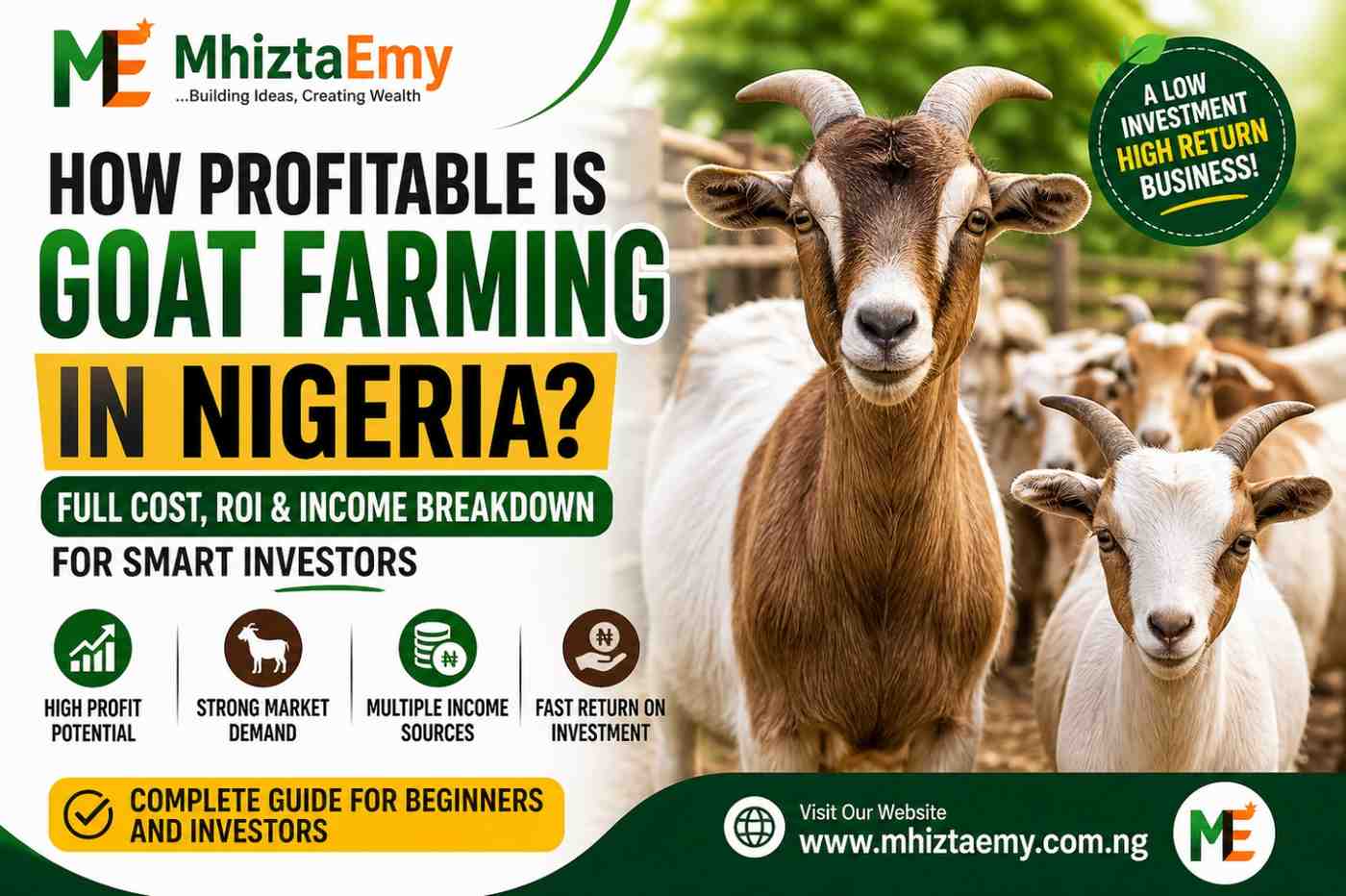
Goat farming has become one of the most profitable livestock businesses in Nigeria due to rising demand for goat meat, breeding stock, and dairy products. Restaurants, pepper soup joints, hotels, and event planners purchase goats regularly throughout the year, while festive seasons often push prices even higher. Many Nigerians now see goat farming as a smart agricultural investment capable of generating steady monthly and yearly income. If you are looking for a business that can grow your money consistently with relatively low risk, this guide will open your eyes to the real earning potential.
Profit in goat farming depends on several factors, including breed selection, feeding quality, management system, disease control, and market timing. Farmers who manage their goats properly often recover their investment quickly and expand into larger commercial operations within a few years. In this article, MhiztaEmy will explain how much profit goat farming generates in Nigeria, including startup cost, feeding expenses, income potential, and realistic profit breakdowns. By the end, you will understand whether this is the right income opportunity for you.
Goat Farming Is Highly Profitable in Nigeria
Demand for goat meat remains consistently high across Nigeria. Goat meat is widely consumed during celebrations, weddings, naming ceremonies, religious festivals, and social gatherings. This consistent demand makes it a reliable income source for both small-scale farmers and large investors.
Why Goat Farming Is Profitable
Several factors make goat farming profitable:
Fast reproduction rate
Strong market demand
Relatively low startup capital
Lower feeding cost compared to cattle
Ability to rear goats on small land areas
Multiple income opportunities
Farmers also earn money from breeding stock, manure sales, and dairy production. This means you are not limited to one source of income, which increases your chances of making steady profit throughout the year.
Factors That Determine Profit in Goat Farming
Profitability varies from one farm to another depending on management quality and business structure. Understanding these factors can help you avoid losses and maximize returns.
Goat Breed Selection
Certain breeds grow faster and attract better market prices. Large breeds often produce higher meat yield and greater profit margins.
Related Posts
- 12 Side Hustles Nigerians Are Using to Earn Extra Income and Stay Financially Stable
- 7 Fast ROI Business Ideas in Nigeria That Can Recover Your Capital in 30 Days
- How to Start a High-Income Relationship Consulting Business in Nigeria (Low Cost, High Profit Guide)
- 20 Legitimate Ways Nigerians Can Earn Money Online in 2026: Trusted Websites That Actually Pay
- 15 Best Freelancing Skills to Learn in Nigeria in 2026 (High-Income Skills That Can Help You Earn in Dollars)
- Best Investment Businesses to Start With ₦20 Million in Nigeria (High-Profit 2026 Guide)
- 15 Smart Ways Nigerians Can Earn Passive Income and Build Long-Term Financial Freedom
- How to Start Commercial Goat Farming in Nigeria and Turn It Into a Profitable Agribusiness (Housing, Equipment & Management Guide)
Popular profitable breeds include:
Red Sokoto goat
Boer goat
Sahel goat
Kano Brown goat
Healthy breeds with strong growth potential increase income substantially and reduce the time it takes to reach market weight.
Feeding Method
Feeding affects body weight, reproduction, and market value. Balanced feeding programs improve growth speed and commercial performance.
Farmers using intensive feeding systems often achieve faster weight gain and better profits. Proper feeding is one of the fastest ways to increase your returns without expanding your farm size.
Disease Management
Disease outbreaks can reduce profit quickly through treatment expenses and animal loss.
Routine vaccination and proper hygiene improve survival rates and reduce financial losses. A healthy herd directly translates into better income.
Market Timing
Goat prices rise sharply during festive periods such as:
Eid-el-Kabir
Christmas
New Year celebrations
Traditional ceremonies
Farmers who sell during high-demand seasons usually earn more profit. Timing your sales properly can significantly increase your overall revenue without increasing costs.
Startup Cost of Goat Farming in Nigeria
Startup capital depends on farm size, location, and production system. Small-scale farmers can begin with a modest budget and expand gradually. This makes it a good option for beginners looking to start a profitable business with limited capital.
Small-Scale Goat Farming Budget
Two female goats
₦80,000 – ₦140,000
One male goat
₦50,000 – ₦90,000
Housing construction
₦80,000 – ₦200,000
Feeding expenses
₦50,000 – ₦120,000
Vaccination and drugs
₦20,000 – ₦40,000
Equipment and water containers
₦20,000 – ₦50,000
A beginner may start with around ₦300,000 to ₦700,000 depending on the scale of operation. This level of investment is considered affordable compared to many other businesses with similar earning potential.
Profit Breakdown for Small-Scale Goat Farming
Small-scale goat farming can still produce impressive returns when managed properly. Many successful farmers today started small and scaled up over time.
Example Profit Calculation
A farmer buys:
Three goats at ₦50,000 each = ₦150,000
Feeding and healthcare expenses = ₦70,000
Housing and miscellaneous expenses = ₦80,000
Total investment becomes approximately ₦300,000.
After several months of proper feeding, the goats may sell for:
₦90,000 to ₦140,000 each during festive periods
Estimated sales revenue:
Three goats × ₦120,000 average selling price = ₦360,000
Estimated profit:
₦360,000 revenue – ₦300,000 total expenses = ₦60,000 profit
This is just a basic example. With better management and strategic selling, profits can be even higher. Breeding activities can increase earnings further over time, making it a scalable income opportunity.
Profit Potential From Goat Breeding
Breeding remains one of the biggest income drivers in goat farming. It allows farmers to grow their herd without constantly buying new animals.
How Goat Reproduction Increases Profit
Female goats often give birth once or twice yearly. Many breeds produce twins frequently, helping farmers expand their herd quickly.
Example:
Five female goats producing two kids each yearly can add ten new goats annually.
Farmers may:
Sell young goats
Expand herd size
Use offspring for fattening
This multiplication effect increases long-term profitability substantially and creates a sustainable business model.
Goat Fattening Profit in Nigeria
Goat fattening involves buying lean goats, feeding them intensively, then selling them at higher prices after weight gain. This method is popular among farmers looking for faster returns.
Example of Goat Fattening Profit
A lean goat purchased for ₦45,000 may require:
₦15,000–₦30,000 feeding cost
₦5,000 medication and maintenance cost
Total investment:
₦70,000 approximately
After fattening, the goat may sell for:
₦110,000–₦180,000 during festive periods
Estimated profit per goat:
₦40,000–₦100,000
This shows why many smart entrepreneurs are entering this space, as it offers quick turnaround and strong profit margins when done correctly.
Profit From Commercial Goat Farming
Medium-scale and large-scale farms usually earn higher profits because they produce larger volumes consistently. This is where goat farming becomes a serious income-generating business.
Income Sources in Commercial Goat Farming
Commercial farms generate income through:
Meat sales
Breeding stock sales
Goat milk production
Organic manure sales
Skin and hide sales
Diversified income streams improve overall business stability and reduce financial risk.
Annual Profit Potential
A medium-sized commercial farm with 50 to 100 goats can generate several million naira yearly depending on market conditions and management efficiency. This makes it a strong option for anyone looking to build long-term wealth through agriculture.
Most Profitable Goat Farming Systems
Different farming systems produce different profit levels. Choosing the right system can improve efficiency and increase your earnings.
Intensive Goat Farming
Intensive systems provide controlled feeding and faster growth.
Advantages include:
Faster weight gain
Better disease control
Efficient breeding
Higher market value
Commercial investors often prefer intensive farming because it supports faster returns and better productivity.
Semi-Intensive Goat Farming
This method combines grazing with supplementary feeding.
Benefits include:
Lower feeding cost
Moderate growth rate
Reduced labor requirement
Many small-scale farmers prefer this approach because it balances cost and productivity.
Zero Grazing Goat Farming
Zero grazing systems keep goats indoors while feed is supplied directly.
Advantages include:
Better feeding management
Reduced theft risk
Efficient manure collection
Improved monitoring
Urban farmers increasingly adopt this system due to limited land availability and better control over operations.
Feeding Cost and Its Effect on Profit
Feeding remains one of the largest expenses in goat farming. Farmers who manage feed efficiently usually enjoy better profit margins and higher returns.
Common Goat Feed in Nigeria
Affordable feed options include:
Elephant grass
Cassava peels
Palm kernel cake
Groundnut hay
Maize bran
Legume leaves
Using locally available feed materials helps reduce production cost and increase profitability.
Best Feed for Faster Growth
Concentrate feeds improve weight gain and commercial value.
Popular concentrate ingredients include:
Maize
Soybean meal
Wheat bran
Bone meal
Salt supplements
Balanced feeding improves overall profitability and shortens the time to market.
Hidden Costs in Goat Farming
Many beginners focus only on buying goats and forget additional operating expenses. Ignoring these costs can reduce profit unexpectedly.
Important Hidden Costs
Veterinary treatment
Transportation
Farm maintenance
Labor expenses
Water supply
Security
Proper budgeting prevents financial surprises later and helps you plan your investment better.
Common Challenges That Reduce Goat Farming Profit
Certain problems can reduce business income if management is poor. Being aware of these challenges helps you avoid costly mistakes.
Disease Outbreaks
Untreated diseases can kill goats quickly and increase medical expenses.
Poor Feeding
Inadequate feeding slows growth and reduces market value.
Theft
Livestock theft remains a major challenge in some areas.
Market Fluctuation
Goat prices sometimes change due to seasonal demand and supply levels.
Good planning helps reduce these risks and protect your investment.
How to Increase Profit in Goat Farming
Farmers can improve earnings through smart management practices and strategic decisions.
Proven Profit Strategies
Buy healthy breeds
Vaccinate regularly
Sell during festive periods
Maintain clean housing
Keep accurate financial records
Use balanced feed
Focus on breeding expansion
Consistency and proper management improve long-term returns greatly. Many successful farmers follow these simple principles to grow their income steadily.
Step-by-Step Guide to Build a Profitable Goat Farm
New farmers should follow structured steps to increase success rate and avoid common mistakes.
Step 1: Start Small
Beginning with a manageable herd reduces risk and allows gradual learning.
Step 2: Focus on Healthy Breeds
Quality goats grow faster and attract better market prices.
Step 3: Feed Properly
Good nutrition improves weight gain and reproductive performance.
Step 4: Maintain Proper Hygiene
Clean housing reduces disease outbreaks and treatment costs.
Step 5: Expand Gradually
Profits should be reinvested carefully to grow the business steadily and increase income over time.
Conclusion
Anyone searching for a profitable agricultural business in Nigeria can build a successful goat farming enterprise with patience, discipline, and good management practices. This is not just a farming activity but a real opportunity to build a consistent income stream and long-term financial growth. To get more business ideas from MhiztaEmy, see more on Mhiztaemy.com.ng
