

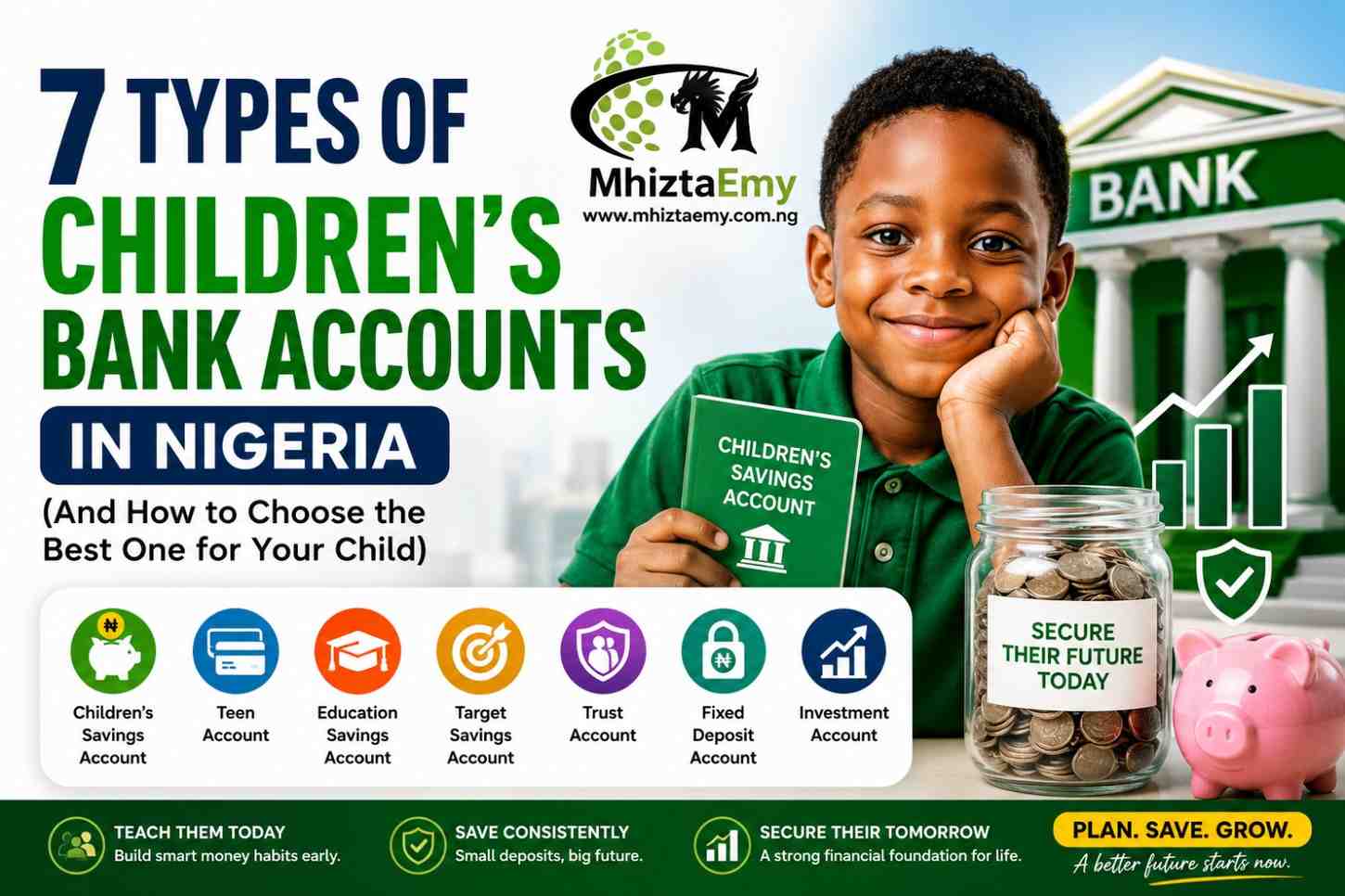
Many parents believe that opening any bank account for a child is enough to secure their financial future. That idea sounds reasonable, yet it leaves out an important detail that can shape how a child learns about money for years to come.
Opening a bank account is an excellent first step, but selecting the right type of account can influence saving habits, financial discipline, investment growth, and future educational plans. Different accounts serve different purposes, and choosing wisely can help your child build a stronger financial foundation from an early age.
Children who grow up learning how money works often develop better saving habits, become more responsible with spending, and enter adulthood with greater financial confidence. That makes the decision about which account to open much more valuable than many parents realize.
Parents across Nigeria are becoming more intentional about preparing their children for future financial success. Banks now offer several account options designed for different age groups and savings goals. Choosing wisely today can help your child develop healthy money habits while giving you peace of mind about tomorrow.
This article explains the seven common types of children’s bank accounts, how each one works, their benefits, and how to decide which option fits your family’s goals.
Why Choosing the Right Children’s Account Is Important
Money habits usually begin at home. A child who watches parents save regularly is more likely to develop similar habits later in life.
Banks now offer different products designed for children at various stages of life. Some focus on savings, others encourage responsible spending, while some are built to help parents prepare for future education or investment goals.
Choosing an account that matches your objective gives every deposit a clear purpose. Small contributions made consistently over several years can become a valuable financial resource when your child reaches adulthood.
Parents should also compare features such as account accessibility, digital banking services, minimum opening balance, account charges, and savings rewards before making a decision. Looking beyond advertisements helps families choose an account that truly supports their long-term plans.
Overview of the Seven Types of Children’s Accounts
| Account Type | Best For | Main Benefit |
|---|---|---|
| Children’s Savings Account | Young children | Builds regular saving habits |
| Teen Account | Teenagers | Teaches responsible money management |
| Education Savings Account | Parents planning school fees | Supports long-term education savings |
| Target Savings Account | Specific financial goals | Encourages disciplined saving |
| Trust Account | Long-term family planning | Parent manages funds until conditions are met |
| Fixed Deposit Account | Lump-sum savings | Higher returns than regular savings in many cases |
| Investment Account | Long-term wealth building | Opportunity for higher growth over time |
Selecting the right account becomes easier after identifying your family’s financial objective. Some parents simply want their children to develop a saving culture, while others are planning several years ahead for education or wealth creation. Matching the account to your goal often produces better long-term results.
Related Posts
- 5 Best Mobile Wallets in Nigeria (2026): Best Apps for Fast Transfers, Savings, Cashback, and Business Payments
- Best Digital Banks in Nigeria With Free Transfers and Better Savings Features (2026 Guide)
- FairMoney Savings Plans Explained: Which FairMoney Account Is Best for Saving and Growing Your Money in Nigeria?
- Best Nigerian Banks for Salary Earners in 2026: 7 Smart Choices That Can Save You Money and Improve Your Banking Experience
- Best Banks in Nigeria for Savings Accounts in 2026: Top Choices to Grow Your Money Safely
- Best Digital Banks and Fintech Apps in Nigeria in 2026: Top Secure Platforms to Save, Spend, Invest, and Grow Your Money
1. Children’s Savings Account
One of the biggest lies many parents believe is this:
“As long as my child has a bank account, I’ve done enough.”
Not really.
Opening a bank account is a great first step, but choosing the right type of account can make a big difference in your child’s financial future.
A children’s savings account remains one of the easiest ways to introduce young children to financial discipline. Parents can deposit birthday gifts, pocket money, holiday cash, and weekly allowances into the account.
Children gradually learn that money grows through consistent saving instead of immediate spending. Even modest deposits made every month can accumulate into a meaningful amount after several years.
Many Nigerian banks also allow parents to monitor the account while maintaining control until the child reaches a specified age.
Parents can make saving enjoyable by setting monthly targets and celebrating milestones whenever those targets are achieved. Small rewards can encourage children to remain interested in saving regularly without developing unhealthy spending habits.
Best For
Parents who want to teach basic saving habits from an early age.
2. Teen Account
Teen accounts are designed for older children who are beginning to manage their own money.
Some accounts include a debit card, internet banking, and mobile banking while allowing parents to monitor transactions or set spending limits. Teenagers gain valuable experience using banking services before becoming financially independent.
Learning how to budget, save, and spend responsibly during teenage years can reduce poor financial habits later in adulthood.
Parents should take time to teach teenagers how to track expenses, avoid unnecessary purchases, and save part of every allowance or income they receive. These simple lessons often become lifelong financial habits.
Best For
Teenagers who receive allowances or earn income from part-time work.
3. Education Savings Account
School fees continue to increase every year, making early planning a smart financial decision.
Education savings accounts help parents save consistently toward nursery school, secondary school, university tuition, professional courses, or overseas education. Regular monthly deposits reduce financial pressure when large school expenses eventually arrive.
Some financial institutions also encourage disciplined contributions by rewarding long-term savers with additional benefits depending on their product offerings.
Starting early gives savings more time to grow and reduces the pressure of raising large amounts at short notice. Automatic monthly deposits can also help parents stay consistent without interrupting other household financial commitments.
Best For
Parents whose biggest concern is preparing for future education expenses.
4. Target Savings Account
Saving becomes easier when every deposit has a purpose.
Target savings accounts allow parents to choose a financial goal and contribute consistently until the desired amount is reached. The goal could be purchasing a laptop, funding university education, paying for professional certifications, or providing startup capital for a child’s future business.
Having a clear destination often motivates families to remain committed to their savings plan.
Many banks allow customers to automate monthly deposits into target savings accounts. Automatic savings reduce the temptation to skip contributions and help parents stay consistent throughout the saving period.
Parents can also involve their children by explaining the purpose of the savings goal. Seeing steady progress can motivate children to appreciate delayed gratification and develop better financial discipline.
Best For
Parents saving toward a specific future expense.
5. Trust Account
Trust accounts work differently from ordinary children’s savings accounts.
A parent, guardian, or trustee manages the funds on behalf of the child until agreed conditions are satisfied. Those conditions may include reaching a certain age, completing university, or achieving another family objective.
Families with long-term wealth planning often consider trust accounts because they provide additional structure regarding how the money will eventually be used.
Trust accounts are commonly used by parents and grandparents who want to preserve wealth for future generations. Clear instructions within the trust help ensure that the funds are used according to the family’s wishes.
Professional financial and legal advice may be helpful before establishing this type of account, especially when substantial assets are involved.
Best For
Long-term financial planning and asset protection.
6. Fixed Deposit Account
Parents who already have a large amount available may decide not to leave it inside a regular savings account.
A fixed deposit account allows the money to remain untouched for an agreed period while earning a higher return than ordinary savings accounts in many situations. Since the funds stay locked during the investment period, this option works best when immediate access is unnecessary.
Patience often rewards families choosing this option for future expenses several years away.
Parents should compare interest rates, minimum deposit requirements, and maturity periods before opening a fixed deposit account. Selecting a suitable tenure helps balance returns with future financial needs.
Best For
Parents with lump-sum savings that will not be needed soon.
7. Investment Account
Some banks and licensed investment companies offer investment products designed for children.
These may include mutual funds and professionally managed investment portfolios. Investments involve risk because returns are not guaranteed, yet they also provide the opportunity for stronger long-term growth than keeping all funds inside a regular savings account.
Parents planning decades ahead often combine savings accounts with investment products to create balanced financial growth.
Diversifying savings between traditional bank accounts and professionally managed investments may help parents prepare for major future expenses. Reviewing investment performance periodically also helps families stay aligned with their financial goals.
Best For
Families focused on building long-term wealth for their children.
How to Choose the Right Children’s Account
Now here’s what many parents overlook.
The best account isn’t always the one your friend recommended.
It’s the one that matches your goal.
A children’s savings account works well when your priority is teaching daily saving habits. Parents preparing for school fees may benefit more from an education savings account. Families saving toward one major purchase could choose a target savings account, while investment accounts may suit those planning several years ahead.
Looking beyond marketing adverts helps parents identify products that genuinely support their child’s future.
Choosing becomes much easier after answering a few simple questions. Ask yourself what you are saving for, how long you plan to save, how often you can make deposits, and when your child will need access to the money. Your answers will point you toward the account that best fits your family’s plans.
Parents should also compare customer service, mobile banking features, account charges, minimum opening balance, withdrawal rules, and account accessibility before making a final decision.
Simple Steps Before Opening an Account
Choosing an account becomes easier after following a simple process.
Start by deciding the purpose of the account. Next, compare interest rates, account maintenance fees, minimum opening balances, withdrawal conditions, and digital banking features. Reading the terms carefully helps prevent unexpected charges later.
Visiting more than one bank before making a final decision also allows you to compare benefits and ask detailed questions.
Taking time to compare different account options can save money in the long run and help you select a product that matches your family’s financial plans instead of choosing simply because it is popular.
Features Worth Comparing
| Feature | Why It Matters |
|---|---|
| Minimum Opening Balance | Determines how much is needed to start |
| Interest or Returns | Helps your child’s money grow |
| Account Fees | Reduces unnecessary charges |
| Mobile Banking | Makes monitoring easier |
| Debit Card Availability | Useful for teenagers |
| Withdrawal Rules | Encourages disciplined saving |
| Parent Controls | Improves security and supervision |
Each feature contributes differently depending on your financial objective. Comparing these details carefully before opening an account helps parents make informed decisions that benefit their children over the long term.
Common Mistakes Many Parents Make
Many families focus only on the bank’s popularity instead of comparing account features.
Another common mistake involves opening an account without defining its purpose. Saving becomes more effective when every contribution supports a clear objective.
Ignoring account charges can also reduce savings over time. Reading the account terms before signing helps parents avoid surprises later.
Some parents also delay opening an account because they believe their child is still too young. Starting early allows savings to grow steadily and gives children more time to develop healthy financial habits.
Choosing an account without checking digital banking features is another mistake that can make monitoring deposits and balances more difficult. Mobile banking and account alerts make it easier for parents to stay informed.
Benefits of Opening a Children’s Bank Account Early
Opening an account early offers more than a place to keep money. It creates opportunities for children to learn financial discipline while parents prepare for future expenses.
Regular savings encourage patience and consistency. Children also begin to appreciate the value of setting financial goals instead of spending every amount they receive.
Parents who involve their children in saving discussions often help them build confidence when making financial decisions later in life.
Documents Commonly Required
Most Nigerian banks request similar documents when opening a children’s account, although requirements may differ slightly.
| Requirement | Purpose |
|---|---|
| Child’s birth certificate | Confirms the child’s identity |
| Parent or guardian’s valid ID | Verifies the account operator |
| Passport photographs | Account documentation |
| Utility bill | Proof of address |
| Completed account opening form | Creates the account |
| BVN or NIN (where applicable) | Identity verification based on the bank’s requirements |
Checking the bank’s latest requirements before visiting a branch can help you avoid unnecessary delays.
Frequently Asked Questions
At what age can a child have a bank account in Nigeria?
Many Nigerian banks allow parents or guardians to open children’s accounts shortly after birth using the required identification documents. Age requirements vary between banks.
Can children operate their accounts independently?
Young children usually require parental supervision. Teen accounts often provide limited independence while allowing parents to monitor activity.
Which account is best for university savings?
Education savings accounts and target savings accounts are commonly chosen for long-term school fee planning.
Are investment accounts safe for children?
Investment products carry varying levels of risk. Parents should understand the product, investment period, and expected returns before investing.
Can parents have more than one account for a child?
Yes. Many families combine savings, education, and investment accounts to achieve different financial goals.
How often should parents save into a children’s account?
Monthly deposits are popular because they are easier to maintain. Consistency usually delivers better long-term results than saving only once in a while.
Can family members contribute to a child’s account?
Many parents encourage grandparents, relatives, and family friends to contribute during birthdays, holidays, or special celebrations, helping the savings grow faster.
Should parents compare more than one bank before opening an account?
Comparing account features, charges, digital banking services, and customer support helps parents choose an option that matches their family’s financial goals.
Conclusion
The account you open today could become the financial foundation your child stands on tomorrow.
Don’t just ask, “Which bank should I choose?”
Also ask, “Which type of account will help my child the most?”
Every family has different financial goals, and choosing an account that aligns with those goals gives your child a stronger start. Consistent saving, careful planning, and early financial education can create opportunities that last far beyond childhood.
Taking time to compare available options today may become one of the most valuable financial decisions you make for your child’s future.
Children benefit most when parents lead by example. Saving consistently, discussing money openly, and choosing an account that fits your family’s plans can help build habits that last for many years. Small steps taken today can create greater financial confidence tomorrow.
If you found this article helpful, consider sharing it with other parents and guardians who are planning for their children’s future. A simple decision made today could make a lasting difference for the next generation.
To Read more on Finance guide click www.mhiztaemy.com.ng
