

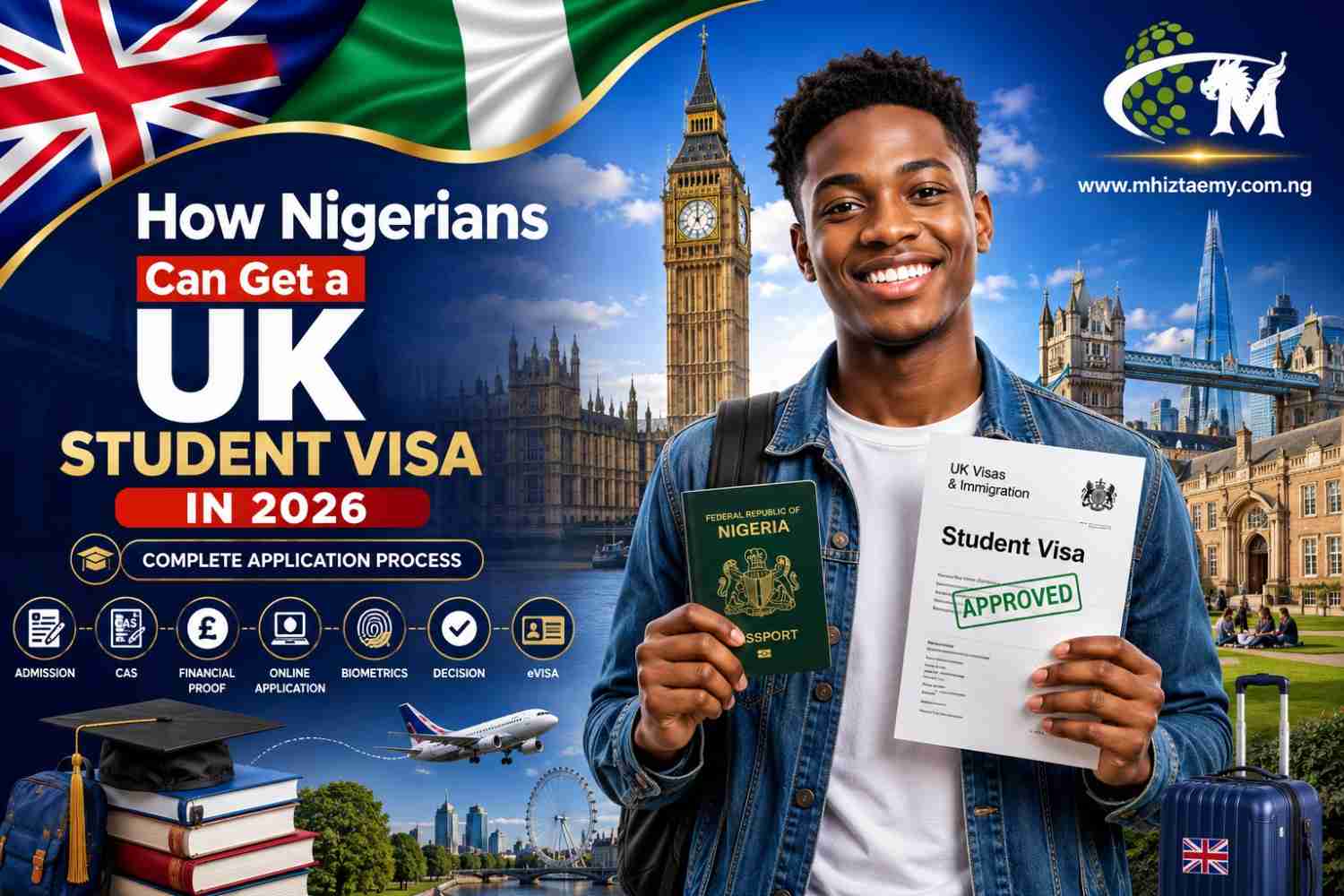
Dreaming of studying in the United Kingdom in 2026? Thousands of students from Nigeria and other African countries successfully obtain UK Student Visas every year to pursue undergraduate, postgraduate, and research programmes at leading universities.
The United Kingdom remains one of the top study destinations for students across Africa, offering world-class universities, internationally recognized qualifications, and excellent career opportunities.
Whether you’re applying from Nigeria, Ghana, Kenya, South Africa, Uganda, Cameroon, Rwanda, Zambia, Zimbabwe, Tanzania, Ethiopia, or any other African country, the UK Student Visa application process is largely the same. However, some supporting document requirements, such as tuberculosis (TB) testing, may vary depending on your country of residence.
This guide explains the latest UK Student Visa application process for 2026, including eligibility requirements, required documents, visa fees, financial requirements, and tips to improve your chances of approval.
Who Can Apply for a UK Student Visa?
You can apply if you:
-
Are at least 16 years old.
-
Have received an unconditional offer from a UK university or college licensed to sponsor international students.
-
Have been issued a Confirmation of Acceptance for Studies (CAS).
Related Posts
- Best Side Hustles People Do in the UK to Survive in 2027 (Real Ways to Earn Extra Income)
- How to Apply for a UK Visitor Visa in 2026: Step-by-Step Process, Requirements, Fees, and Approval Tips you
- Domestic vs International First Class: 2026 Prices, Best Airlines & Is First Class Worth the Cost?
- Cheapest Way to Move to the UK from Nigeria in 2026: Latest UK Immigration Rules, Visa Costs and Affordable Routes
- How to Rent a House in the UK as a New Immigrant in 2026: Requirements, Costs and Essential Tips
- Best UK Universities for Nigerians and African Students in 2026 (Complete Japa Guide + Scholarships, Tuition Fees & Admission Tips)
- Types of UK Visitor Visas Explained: A Complete Guide for Nigerians and Other International Travelers (2026 Update)
- How to Japa to the UK from Nigeria in 2026: Legal Routes, Costs, Requirements and Step-by-Step Guide
-
Meet the English language requirements.
-
Can prove you have enough money to pay your tuition fees and living expenses.
-
Intend to study an eligible full-time course.
Step 1: Apply to a UK University
Before you can apply for a Student Visa, you must first secure admission to a UK educational institution.
Most universities require:
-
Academic transcripts and certificates.
-
A valid international passport.
-
English language proficiency evidence (such as IELTS, where applicable).
-
A personal statement.
-
Reference letters (for some courses).
After meeting all admission conditions and accepting your offer, your university will issue your CAS.
Step 2: Receive Your Confirmation of Acceptance for Studies (CAS)
Your CAS is an electronic document issued by your university containing:
-
Your unique CAS number.
-
Course details.
-
Tuition fees.
-
Course start and end dates.
-
Your university’s sponsor licence number.
You cannot apply for a UK Student Visa without a valid CAS.
Step 3: Prepare the Required Documents
Most applicants from African countries will need:
-
A valid international passport.
-
CAS number.
-
Proof of sufficient funds.
-
Academic qualifications.
-
English language test result (if required).
-
Tuberculosis (TB) test certificate (if required for your country).
-
Passport-sized photographs (if requested).
-
ATAS certificate (for certain science, engineering, and research courses).
Always check the latest UK government guidance, as document requirements can vary depending on your nationality and personal circumstances.
Quick Checklist
| Requirement | Status |
|---|---|
| Valid Passport | ✅ Required |
| CAS | ✅ Required |
| Financial Proof | ✅ Required |
| English Requirement | Usually Required |
| TB Test Certificate | Depends on Country |
| Biometrics | ✅ Required |
| Student Visa Fee | £558 |
| Immigration Health Surcharge | Required |
Step 4: Meet the Financial Requirement
You must prove you have enough money to cover:
Tuition Fees
Any unpaid tuition fees for your first year of study, after deducting payments already made and recorded on your CAS.
Living Expenses
Current maintenance requirements are:
-
£1,529 per month (for up to 9 months) if studying in London.
-
£1,171 per month (for up to 9 months) if studying outside London.
The required funds must usually remain in your bank account for at least 28 consecutive days, and your bank statement must meet UK immigration requirements.
Step 5: Complete the Online Visa Application
Complete the online Student Visa application through the official UK Government website.
During the application, you will:
-
Fill in your personal information.
-
Enter your CAS details.
-
Upload supporting documents.
-
Answer questions about your finances and intended studies.
Step 6: Pay the Required Fees
For most applicants in 2026:
-
Student Visa application fee: £558
-
Immigration Health Surcharge (IHS): £776 per year of your visa.
The IHS allows eligible students to access healthcare through the UK’s National Health Service (NHS).
Step 7: Book Your Biometrics Appointment
After submitting your application, you will usually book an appointment at a Visa Application Centre in your country.
During your appointment, you may be required to:
-
Submit fingerprints.
-
Have your photograph taken.
-
Present your passport.
-
Provide any requested supporting documents.
Depending on your circumstances, some applicants may be able to verify their identity using the UK Immigration ID Check app.
Step 8: Wait for a Decision
Most Student Visa applications submitted outside the UK are processed within approximately 3 weeks, although processing times may be longer during busy periods.
Step 9: Receive Your eVisa
If your application is approved, you will receive a decision and instructions on how to access your digital immigration status (eVisa) through your UK Visas and Immigration (UKVI) account.
UK Student Visa Application Process at a Glance
Admission
     ↓
Receive Offer
     ↓
Get CAS
     ↓
Prepare Financial Proof
     ↓
Complete Online Application
     ↓
Pay Visa Fee & IHS
     ↓
Attend Biometrics
     ↓
Visa Decision
     ↓
Receive eVisa
     ↓
Travel to the UK
Tuberculosis (TB) Test Requirements
Applicants from many African countries, including Nigeria, Ghana, Kenya, Uganda, Tanzania, Ethiopia, Zambia, Zimbabwe, Cameroon, and several others, are required to obtain a TB test certificate from a UK-approved clinic before applying.
Some countries may not require a TB test, so always confirm the latest requirements based on your country of residence.
UK Student Visa for Nigerians
Nigerian students remain among the largest groups of international students in the UK. Applicants must obtain admission from a licensed UK institution, receive a valid CAS, meet the financial requirement, complete biometrics, and provide a TB certificate from an approved clinic where applicable. Preparing complete documentation and applying early can help reduce delays.
UK Student Visa for Ghanaians
Applicants from Ghana follow the same application process as other international students. A valid passport, CAS, financial evidence, and any required supporting documents must be submitted before attending the biometrics appointment.
UK Student Visa for Kenyans
Students applying from Kenya should carefully prepare their financial documents, academic records, and any country-specific requirements before submitting their online application. Always ensure every document matches the information entered in the application form.
UK Student Visa for South Africans
South African applicants also follow the standard UK Student Visa process. Depending on individual circumstances, supporting documents may differ, so checking the latest guidance before applying is always recommended.
Can You Work While Studying?
Many international students can work during their studies, subject to the conditions attached to their Student Visa. Always check the work restrictions on your visa before accepting employment.
Common Reasons for Visa Refusal
-
Insufficient financial evidence.
-
Incorrect or incomplete documents.
-
Errors in the application form.
-
Failure to meet immigration requirements.
-
Invalid CAS.
-
Providing false or misleading information.
Tips for a Successful Application
-
Apply early after receiving your CAS.
-
Ensure your passport is valid for the duration of your travel.
-
Maintain the required funds for the full 28-day period.
-
Carefully review every document before submitting your application.
-
Attend your biometrics appointment on time.
-
Wait until your visa is approved before making irreversible travel arrangements.
Frequently Asked Questions
Can Africans apply for a UK Student Visa?
Yes. Citizens of all African countries can apply, provided they meet the UK Student Visa requirements.
How long does the process take?
Most applications from outside the UK are processed in around three weeks.
Can I bring my family?
Only students enrolled in eligible postgraduate research programmes or other qualifying courses under current UK immigration rules may be able to bring dependants. Check the latest rules before applying.
Can I stay in the UK after graduation?
Many graduates may be eligible to apply for the UK Graduate Visa if they meet the requirements in force at the time they complete their studies.
Can I apply without IELTS?
Some universities accept alternative evidence of English language proficiency. Whether IELTS is required depends on your chosen institution, course, and nationality.
Can I use my parents’ bank statement?
Yes. In many cases, applicants may use their parents’ financial documents if they also provide the required supporting evidence, such as proof of relationship and a consent letter where applicable.
What happens if my visa is refused?
The refusal notice will explain the reason for the decision. Depending on the circumstances, you may be able to submit a new application after correcting the issues identified.
Can I switch to a Student Visa from another UK visa?
Some applicants already in the UK may be eligible to switch to a Student Visa if they meet the immigration requirements. Certain visa categories are not eligible to switch.
Can I work full-time during holidays?
Eligible international students may be allowed to work full-time during official vacation periods if permitted by the conditions of their Student Visa.
How long is a CAS valid?
A CAS is issued specifically for your course and is generally used only once for your Student Visa application. Your university will advise you if a new CAS is required.
Can I study part-time?
Some part-time courses may qualify for a Student Visa, although different immigration conditions may apply. Check your institution’s guidance before applying.
How early can I apply?
You can usually apply up to six months before your course start date if you are applying from outside the UK.
Can I travel outside the UK while studying?
Yes. Many international students can travel during their studies provided they continue to meet the conditions of their visa and maintain valid immigration permission.
Conclusion
The UK Student Visa process in 2026 is the same for applicants from Nigeria and most other African countries. The key to a successful application is securing admission to a licensed UK institution, obtaining your CAS, meeting the financial requirements, and submitting accurate, complete documentation.
Preparing your documents early, following every application step carefully, and checking the latest immigration guidance before applying can make the process much smoother.
Before applying, always verify the latest immigration rules and document requirements on the official UK Government website, as policies and fees can change.
Want to read more on this, click here for more on UK VISA Articles
