

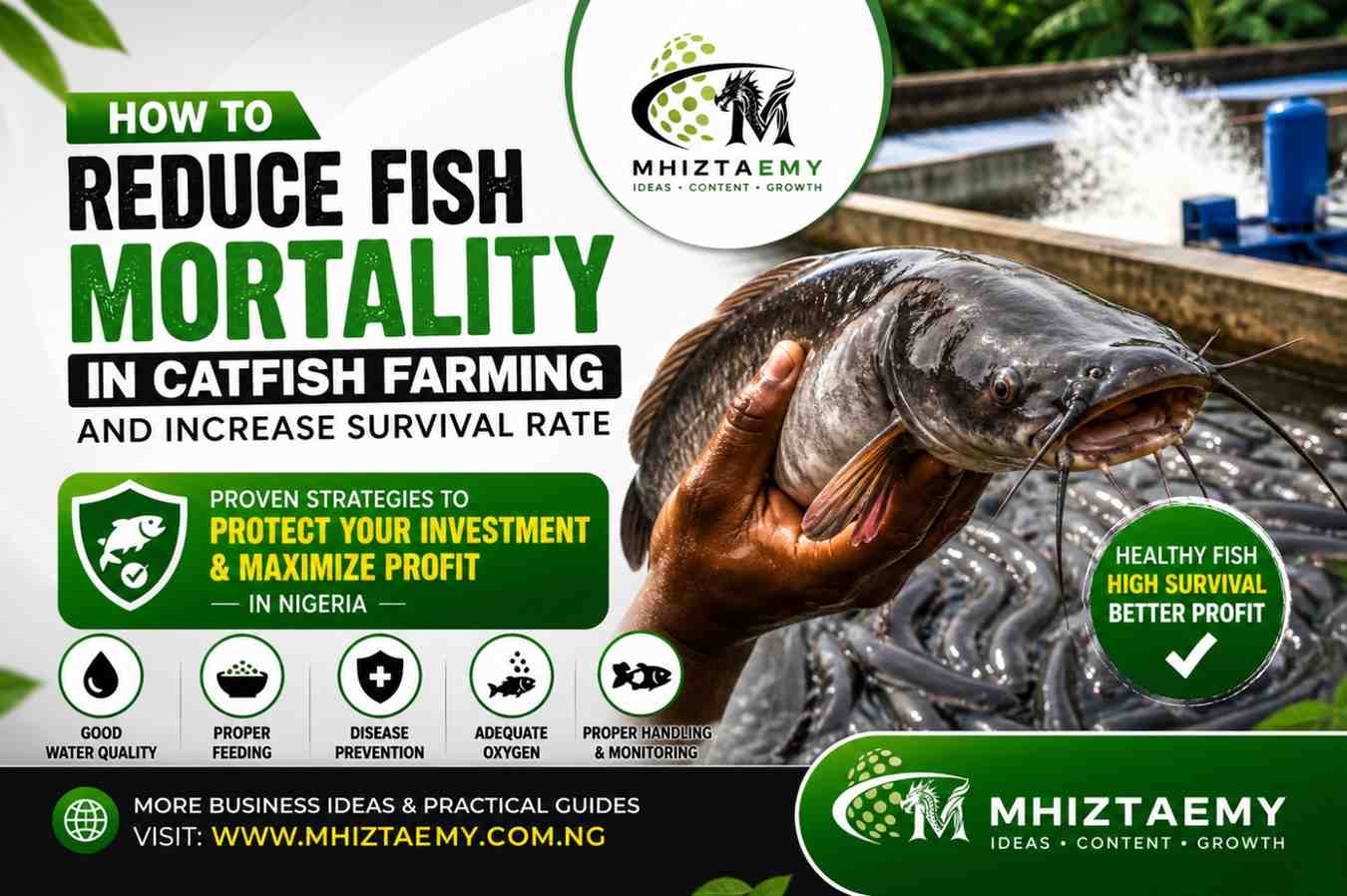
Fish mortality is one of the biggest challenges facing catfish farmers in Nigeria. Losing a large number of fish during production can wipe out your expected profit and even lead to total business failure. Many of these losses are avoidable when proper management practices are followed consistently.
If you are serious about increasing your harvest output and avoiding unnecessary financial losses, understanding the exact causes of fish death—and how to prevent them—is critical. A small mistake in pond management can cost thousands of naira within days.
In this article, MhiztaEmy will explain how to reduce fish mortality in catfish farming and increase survival rate using practical methods that work in Nigeria. Applying these strategies will help you protect your investment, improve harvest yield, and boost overall profitability.
Common Causes of Fish Mortality in Nigeria
Fish deaths usually occur due to poor management rather than unavoidable factors. Identifying the root causes helps you prevent losses early and avoid costly mistakes that reduce your farm’s productivity.
Poor Water Quality
Dirty or stagnant water reduces oxygen levels and exposes fish to harmful substances. This is one of the leading causes of fish death. Poor water conditions can silently kill your fish before you even notice any visible signs.
Overcrowding
Stocking too many fish in a pond creates stress and competition for oxygen and feed. This leads to slow growth and increased mortality. Many farmers lose a significant percentage of their stock simply because of overpopulation.
Poor Feeding Practices
Low-quality feed or неправиль feeding schedules weaken fish and make them vulnerable to disease. Inconsistent feeding also leads to uneven growth, increasing cannibalism.
Disease and Infection
Bacterial, fungal, and parasitic infections spread quickly in poorly managed ponds, leading to mass deaths. Once an outbreak begins, it can wipe out your entire stock if not controlled early.
Sudden Environmental Changes
Abrupt changes in water temperature, pH, or oxygen levels can shock fish and cause death within a short time. Stability is key to survival in fish farming.
How to Maintain Good Water Quality
Water quality management is the foundation of fish survival. Clean water promotes healthy growth and reduces disease risk. Farmers who invest in proper water management often record higher survival rates and better profits.
Related Posts
- How to Start a POS Business in Nigeria (2026): CAC Registration, Costs, Legal Requirements & Hidden Fees Most Agents Ignore
- Best Side Hustles for Nigerians That Can Pay More Than a Full-Time Job in 2026
- How to Start a High-Income Relationship Consulting Business in Nigeria (Low Cost, High Profit Guide)
- How to Start a Profitable Business in Nigeria with ₦50K or Less (Proven Ideas That Can Pay You Weekly in 2026)
- 10 Best Low Investment Businesses in Nigeria (2026) That Can Make You ₦5,000–₦50,000 Daily
- POS Business in Nigeria: Daily Profit, Startup Cost & Hidden Risks (2026 Guide to Earning ₦200K Monthly)
- How Much Does It Cost to Start a Block Industry in Nigeria (2026)? Full Setup Cost, Equipment & Profit Guide
- 10 Best POS Business Locations in Nigeria (2026): Proven Spots That Earn ₦20K–₦50K Daily
Effective Water Management Tips
● Change water regularly, especially in concrete ponds
● Avoid overfeeding to prevent water pollution
● Use clean water from borehole or treated sources
● Monitor water color; dirty or dark water indicates poor quality
● Ensure proper drainage system
Maintaining fresh and oxygen-rich water keeps fish active and healthy, reducing the chances of sudden losses that can affect your income.
Proper Stocking Density for Survival
Stocking density should match the size of your pond and water capacity. Overcrowding leads to stress and oxygen shortage, which directly affects survival rate and overall farm performance.
Recommended Stocking Guide
● Small ponds: 100–300 fish
● Medium ponds: 300–1,000 fish
● Large ponds: 1,000+ fish (with proper water flow system)
Maintaining the right stocking level improves survival rate and growth performance, ensuring you get maximum return on your investment.
Feeding Practices That Reduce Mortality
Feeding plays a major role in fish health. Proper feeding strengthens fish and prevents disease. Farmers who use the right feeding strategy often spend less on treatment and record better harvest outcomes.
Smart Feeding Tips
● Use high-quality floating feed
● Feed fish 2–3 times daily at fixed times
● Avoid overfeeding to reduce waste
● Adjust feed size based on fish age
● Observe fish during feeding
Balanced feeding improves immunity and reduces stress among fish, helping you avoid unnecessary losses.
Disease Prevention and Control
Preventing disease is more effective than treating it after it spreads. Good hygiene and monitoring reduce the risk of infection and help maintain a stable production cycle.
Disease Prevention Measures
● Clean ponds regularly
● Disinfect ponds before stocking
● Avoid introducing infected fish
● Quarantine new fish before mixing
● Consult a fish health expert when necessary
Early detection of disease helps prevent mass mortality and protects your farm from major financial setbacks.
Importance of Regular Monitoring
Daily observation allows you to detect problems before they become serious. Healthy fish are active and respond quickly during feeding.
What to Monitor
● Fish behavior and movement
● Feeding response
● Water condition
● Signs of disease or injury
Prompt action based on observation reduces losses significantly and keeps your production on track.
Sorting Fish to Prevent Cannibalism
Cannibalism is common in catfish farming, especially when fish sizes vary widely. Larger fish often prey on smaller ones, leading to avoidable losses.
Sorting Tips
● Separate fish by size regularly
● Remove aggressive or fast-growing fish
● Ensure adequate feeding to reduce hunger
Sorting improves survival rate and ensures uniform growth, which increases your market value at harvest.
Oxygen Supply and Aeration
Fish need oxygen to survive. Low oxygen levels can cause sudden death, especially in overcrowded ponds. Poor oxygen supply is one of the fastest ways farmers lose fish overnight.
Ways to Improve Oxygen Supply
● Change water frequently
● Avoid overstocking
● Use aerators in large farms
● Reduce organic waste in water
Proper oxygen supply keeps fish healthy and active while reducing unexpected mortality.
Handling and Transportation Practices
Rough handling during stocking or transfer can injure fish and lead to death later. Many farmers overlook this stage and lose fish before production even begins.
Safe Handling Tips
● Handle fish gently
● Avoid overcrowding during transport
● Use clean containers
● Reduce stress during transfer
Careful handling improves survival during stocking and harvesting, ensuring better outcomes.
Common Mistakes That Increase Fish Mortality
Many farmers unknowingly increase fish death due to poor practices. Avoiding these mistakes will improve your results and save you from unnecessary expenses.
Mistakes to Avoid
● Overstocking the pond
● Using poor-quality feed
● Ignoring water quality
● Delaying treatment of sick fish
● Poor pond hygiene
Correcting these errors will greatly reduce losses and improve your farm’s productivity.
How to Increase Overall Survival Rate
Improving survival rate requires consistent effort and attention to detail. Combining multiple strategies produces the best results and ensures long-term success.
Proven Survival Strategies
● Maintain clean and fresh water
● Feed fish properly and consistently
● Monitor fish daily
● Prevent disease through hygiene
● Sort fish regularly
Applying these methods ensures that most of your fish reach market size, increasing your revenue and reducing waste.
If you implement these strategies consistently, you will notice a significant improvement in fish survival, faster growth rate, and higher profits from your farming business.
To get more business ideas from MhiztaEmy, see more on www.mhiztaemy.com.ng
