

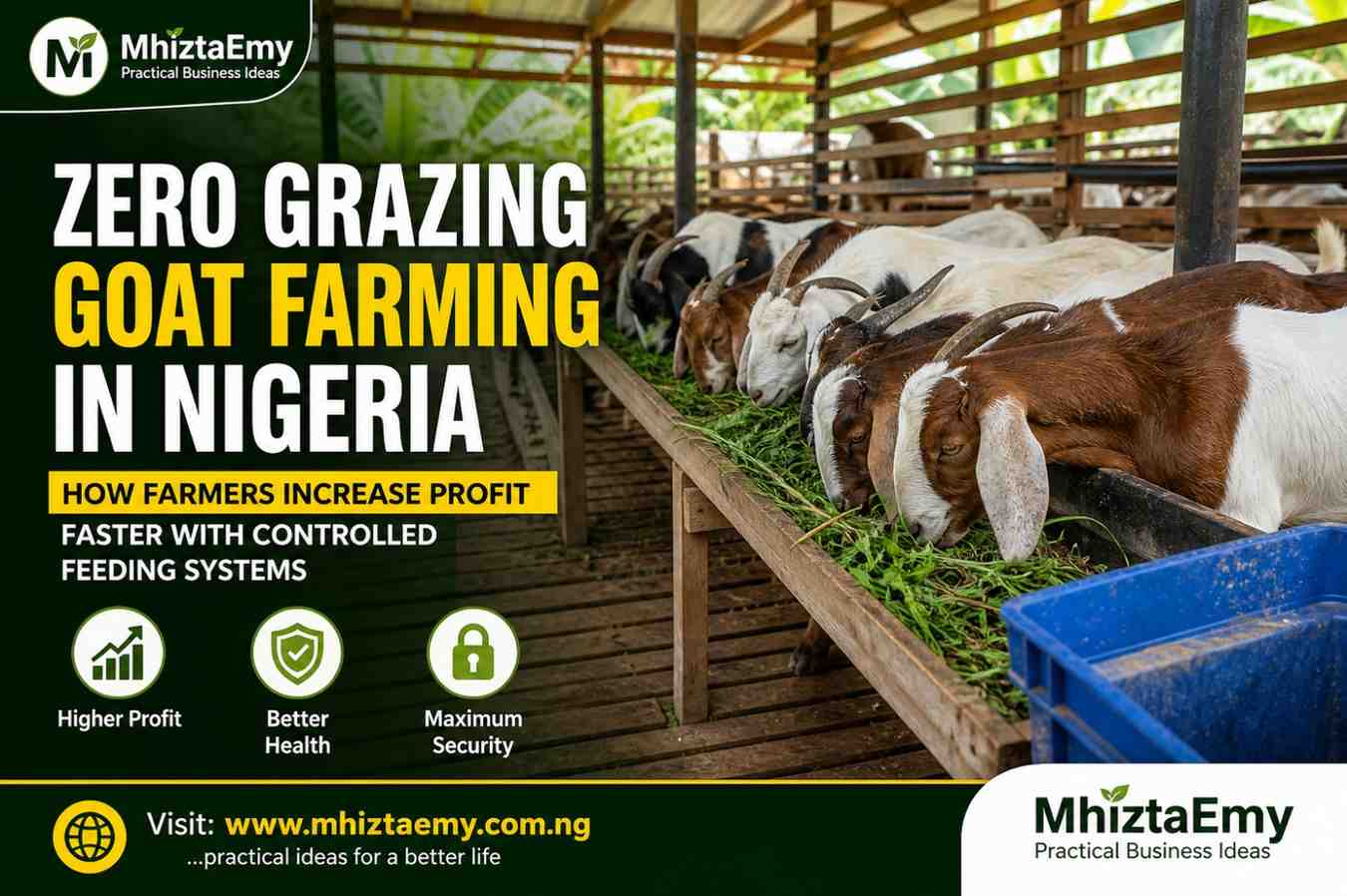
Zero grazing goat farming is becoming increasingly popular in Nigeria as livestock farmers search for modern methods that improve productivity and reduce operational challenges. Traditional grazing systems still exist in many rural communities, but urban farmers and commercial livestock investors now prefer more controlled farming methods that support faster growth and better management. Rising land prices, insecurity, and feed shortages have also pushed many farmers toward intensive livestock production systems.
If you are planning to start a livestock business or scale your current farm, understanding how this system works and how it affects income can help you make smarter financial decisions and avoid costly mistakes.
Zero grazing allows farmers to rear goats in confined spaces while supplying feed directly to them instead of allowing free movement for grazing. Properly managed zero grazing systems can produce healthier goats, faster weight gain, and better commercial returns. In this article, MhiztaEmy will explain zero grazing goat farming in Nigeria and examine whether it is more profitable than traditional goat farming systems.
What Is Zero Grazing Goat Farming?
Zero grazing is an intensive livestock management system where goats remain permanently inside housing units or fenced enclosures. Farmers harvest feed manually and provide it directly to the animals.
This farming system helps farmers:
● Control feeding properly
● Reduce disease exposure
● Improve growth monitoring
● Prevent theft
● Manage goats on smaller land spaces
Zero grazing is widely used in commercial goat farming because it supports efficient production and better farm organization.
Many Nigerian farmers now face challenges such as limited grazing land, urban expansion, and rising insecurity. Free-range grazing systems often expose goats to accidents, diseases, and theft.
Related Posts
- POS Business in Nigeria: Daily Profit, Startup Cost & Hidden Risks (2026 Guide to Earning ₦200K Monthly)
- 12 Side Hustles Nigerians Are Using to Earn Extra Income and Stay Financially Stable
- Best Businesses to Start With ₦200,000 in Nigeria (Fast Returns & Daily Income Ideas 2026)
- 5 Businesses to Avoid If You’re Starting From Scratch: Smart Choices Every Beginner Should Make Before Investing
- Premium Matchmaking Service Business in Nigeria (2026): Cost, Strategy & High-Income Earnings Guide
- How to Start a High-Income Relationship Consulting Business in Nigeria (Low Cost, High Profit Guide)
- 20 Legitimate Ways Nigerians Can Earn Money Online in 2026: Trusted Websites That Actually Pay
- How to Reduce Fish Mortality in Catfish Farming and Increase Survival Rate (Proven Methods to Protect Your Investment and Maximize Profit in Nigeria)
Zero grazing offers solutions to these problems through controlled management systems. Commercial farmers can rear goats successfully even within urban and semi-urban areas.
Several factors driving zero grazing adoption include:
● Rising land cost
● Increased livestock theft
● Better disease management
● Faster commercial production
● Efficient manure collection
● Improved feeding control
Farmers looking for higher productivity often prefer this method.
How Zero Grazing Goat Farming Works
Zero grazing systems depend heavily on proper feeding, housing, and hygiene management. Since goats do not roam freely, farmers must provide all nutritional needs directly.
Daily activities usually include:
● Harvesting forage
● Feeding concentrates
● Cleaning housing units
● Monitoring animal health
● Providing clean water
● Managing waste disposal
Good management determines profitability under this system, and consistency in daily operations is what separates profitable farms from struggling ones.
Advantages of Zero Grazing Goat Farming
Zero grazing provides several commercial and management benefits.
Better Feeding Control
Farmers can monitor exactly what goats consume daily. Balanced nutrition improves weight gain and overall productivity.
Controlled feeding also reduces feed wastage, which directly impacts profitability over time.
Faster Weight Gain
Goats under zero grazing often conserve more energy because they do not walk long distances searching for food.
Energy saved contributes to faster body development and meat production, leading to quicker market readiness and faster cash flow.
Reduced Disease Exposure
Free-range goats may contact infected animals or contaminated grazing fields. Zero grazing reduces this risk substantially.
Farmers can also isolate sick goats quickly, reducing treatment costs and preventing large-scale losses.
Improved Security
Goats kept inside secured housing face lower risk of theft and predator attacks.
This advantage is especially important in areas with livestock insecurity where losses can wipe out profit.
Efficient Manure Collection
Zero grazing allows farmers to collect manure easily for crop farming or commercial fertilizer sales.
Organic manure creates additional income opportunities, turning waste into profit.
Disadvantages of Zero Grazing Goat Farming
Although profitable, zero grazing also has certain challenges farmers should consider.
Higher Feeding Cost
Farmers must provide all feed manually since goats cannot search for natural forage independently.
Feeding expenses may rise if forage production is poor, making planning essential.
Increased Labor Requirement
Daily feed harvesting, cleaning, and management require consistent labor.
Commercial farms may need hired workers for efficient operation, which increases operational cost but can improve productivity if well managed.
Housing Construction Cost
Good housing systems require proper ventilation, roofing, and drainage.
Initial setup expenses can be higher than traditional grazing systems, but this cost is often recovered over time through improved production.
Management Pressure
Farmers must monitor feeding, hygiene, and health carefully because goats depend entirely on human management.
Poor management can reduce productivity quickly and affect overall profitability.
Best Goat Breeds for Zero Grazing in Nigeria
Certain goat breeds perform better under intensive farming systems.
Boer Goat
Boer goats gain weight rapidly and respond well to controlled feeding systems.
Commercial meat farmers often prefer this breed because of its high market value.
Red Sokoto Goat
Red Sokoto goats adapt well to Nigerian conditions and perform efficiently under intensive management.
Sahel Goat
Sahel goats grow larger and produce excellent meat yield under balanced feeding systems.
Crossbred Goats
Crossbreeding foreign breeds with local goats often improves growth performance and disease resistance, giving farmers better returns.
Housing Requirements for Zero Grazing Goat Farming
Housing quality plays a major role in successful zero grazing operations.
Features of a Good Zero Grazing House
Proper housing should include:
● Good ventilation
● Dry flooring
● Adequate spacing
● Proper drainage
● Strong roofing
● Easy cleaning system
Clean environments improve goat health and productivity, reducing long-term costs.
Raised Flooring System
Many farmers use raised floors because they help manure fall through easily.
Benefits include:
● Reduced disease exposure
● Easier waste management
● Better hygiene
● Improved comfort
Raised flooring systems are highly popular in commercial farms and often recommended for serious investors.
Feeding System in Zero Grazing Goat Farming
Feeding determines growth rate and overall profitability under zero grazing systems.
Natural Feed Sources
Farmers commonly provide:
● Elephant grass
● Legume leaves
● Cassava peels
● Groundnut hay
● Maize stalk
● Yam peels
Fresh forage should be harvested regularly for better nutritional quality and consistent growth performance.
Concentrate Feed for Faster Growth
Commercial farmers often combine forage with concentrate feed.
Popular concentrate ingredients include:
● Maize
● Soybean meal
● Wheat bran
● Palm kernel cake
● Bone meal
Balanced diets improve rapid weight gain and market value, helping farmers achieve higher selling prices.
Water Requirement
Goats require constant access to clean water daily.
Water supports digestion, nutrient absorption, and body development, making it essential for optimal performance.
Disease Management in Zero Grazing Systems
Disease prevention remains essential because confined animals can spread infections quickly if hygiene is poor.
Common Goat Diseases
Farmers commonly encounter:
● PPR
● Pneumonia
● Foot rot
● Parasite infestation
● Diarrhea
Disease Prevention Tips
Farmers should:
● Vaccinate regularly
● Clean housing daily
● Isolate sick goats
● Use quality feed
● Conduct veterinary checks
Healthy goats produce better commercial results and reduce unexpected expenses.
Startup Cost of Zero Grazing Goat Farming in Nigeria
Startup capital depends on herd size and housing quality.
Estimated Startup Budget
Housing construction ₦200,000 – ₦1.5 million
Goats ₦300,000 – ₦2 million
Feeding supplies ₦100,000 – ₦400,000
Equipment ₦50,000 – ₦200,000
Vaccination and medication ₦50,000 – ₦150,000
Small commercial farms may begin with ₦700,000 to ₦3 million depending on scale, making it accessible to both small and serious investors.
Before starting, it is important to plan your budget carefully and allocate funds for feeding and healthcare, as these directly affect profitability.
Is Zero Grazing More Profitable?
Profitability depends on management quality, feeding efficiency, and market strategy.
Reasons Zero Grazing Can Increase Profit
Zero grazing may improve profit because of:
● Faster growth rate
● Better feed utilization
● Reduced theft losses
● Lower mortality rate
● Higher market value
Commercial farmers often achieve better productivity under controlled systems, which translates into higher income over time.
Situations Where Profit May Reduce
Poor feeding management or expensive purchased feed can reduce profitability.
Farmers who fail to maintain hygiene may also experience disease outbreaks that increase expenses.
Good management remains essential for success, especially for those aiming to scale.
Zero Grazing vs Traditional Grazing
Both systems have advantages depending on available resources and business goals.
Zero Grazing Advantages
● Better management
● Faster growth
● Improved disease control
● Suitable for small land areas
Traditional Grazing Advantages
● Lower feeding cost
● Reduced labor
● Less housing expense
Commercial investors usually prefer zero grazing because it supports intensive production and higher productivity, especially in urban environments.
Marketing Strategies for Zero Grazing Goat Farmers
Proper marketing improves profitability and customer retention.
Profitable sales channels include:
● Livestock markets
● Hotels and restaurants
● Event planners
● Religious celebrations
● Social media advertising
Healthy, well-fed goats usually attract premium buyers, allowing farmers to charge higher prices and increase revenue.
Positioning your farm as a reliable supplier can also help you secure repeat customers and long-term contracts.
Tips to Succeed in Zero Grazing Goat Farming
Farmers can improve results through disciplined management.
Helpful tips include:
● Start with healthy breeds
● Maintain proper hygiene
● Feed balanced diets consistently
● Vaccinate regularly
● Monitor growth performance
● Keep accurate records
Consistency improves long-term profitability and helps farmers scale their operations successfully.
Anyone interested in modern livestock production can build a profitable zero grazing goat farming business through careful planning and disciplined management. To get more business ideas from MhiztaEmy, see more on Mhiztaemy.com.ng
