

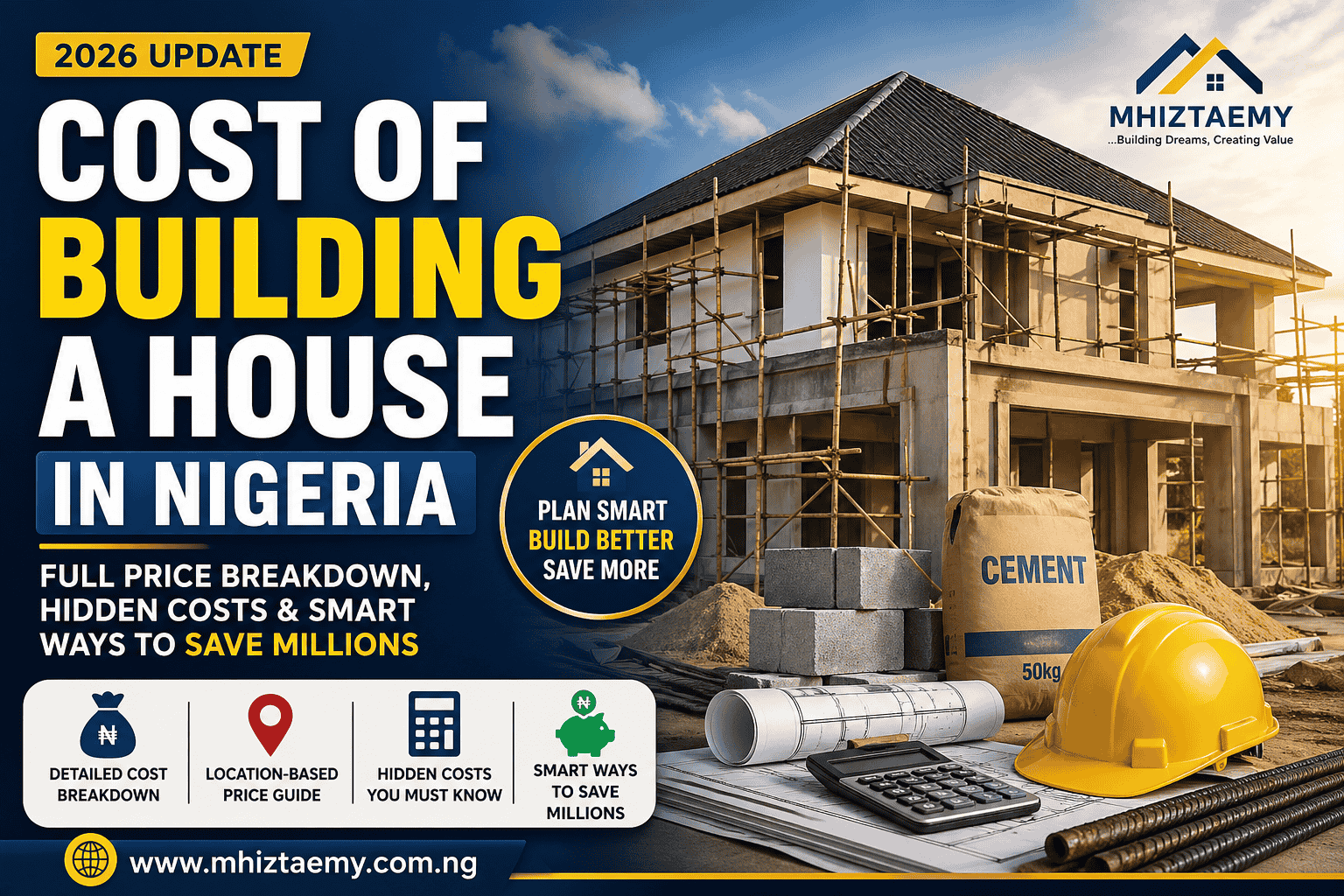
Building a house in Nigeria is one of the biggest financial decisions anyone can make, yet many people start without a clear picture of the real cost. What begins as a “simple” project often turns into a budget-stretching experience due to rising material prices, labor fluctuations, and unexpected expenses that show up midway.
Across Nigeria today, the cost of building a house varies widely depending on location, design, materials, and finishing level. Cement prices fluctuate, exchange rates affect imported materials, and labor costs differ from one state to another. Anyone planning to build must go beyond rough estimates and understand the full financial picture.
This detailed guide reveals the actual cost of building a house in Nigeria in 2026, including cost per square meter, price ranges for different house types, hidden charges many people ignore, and smart strategies to save millions without compromising quality.
Cost Per Square Meter in Nigeria (2026)
Construction costs in Nigeria are often calculated per square meter. This gives a realistic estimate before the project even begins.
As of 2026, average building costs fall within these ranges:
Basic finish ranges from ₦180,000 to ₦250,000 per square meter. Mid-range finish falls between ₦250,000 and ₦400,000 per square meter. Luxury finish starts from ₦400,000 and can exceed ₦800,000 per square meter depending on imported fittings and smart features.
A typical 3-bedroom bungalow with about 120–150 square meters may cost between ₦27 million and ₦60 million depending on finishing level and location. Duplexes and larger homes naturally cost more due to structural complexity and size.
Exchange rate instability continues to push material prices higher, especially items like tiles, sanitary fittings, and electrical accessories that are often imported. Builders who plan early and buy materials in bulk tend to reduce overall costs.
Cost of Building Popular House Types in Nigeria
Different house designs come with different cost implications. Size, structure, and finishing level all affect the final budget.
2-Bedroom Bungalow
A modest 2-bedroom bungalow is one of the most affordable options for many Nigerians. Construction costs typically range from ₦18 million to ₦35 million depending on location and finishing. Rural areas tend to be cheaper due to lower labor costs.
Related Posts
This option works well for small families or rental investment. Simpler roofing designs and minimal finishing help keep costs down.
3-Bedroom Bungalow
A 3-bedroom bungalow remains the most popular choice across Nigeria. Costs usually range from ₦27 million to ₦60 million. High-end finishes, POP ceilings, and imported tiles can push costs toward the upper range.
Many homeowners prefer this design due to its balance between space and affordability. Proper planning at the foundation stage helps avoid costly structural adjustments later.
Duplex (4–5 Bedrooms)
Duplexes cost significantly more due to their structural requirements. A standard 4-bedroom duplex may cost between ₦65 million and ₦150 million depending on finishing level and design complexity.
Staircases, reinforced foundations, and additional roofing requirements increase the budget. Luxury duplexes in urban areas often exceed ₦200 million.
Luxury Houses & Smart Homes
Luxury homes and smart buildings are becoming more common in Nigeria, especially in major cities. These houses include features such as automated lighting, CCTV systems, solar integration, and advanced security systems.
Construction costs for luxury homes typically start from ₦150 million and can go beyond ₦500 million. Imported materials, designer interiors, and advanced installations contribute heavily to these figures.
Smart homes require careful planning from the early stages, especially for wiring and system integration. Retrofitting later can be more expensive than installing everything during construction.
Location-Based Construction Cost in Nigeria
Location plays a major role in determining the cost of building a house. Prices differ due to land value, labor availability, and transportation costs.
Building in Lagos is generally the most expensive due to high labor rates and material demand. Abuja follows closely, especially in prime districts. Cities like Port Harcourt and Ibadan offer slightly lower costs but still fall within the urban price range.
Rural areas provide a more affordable option. Land is cheaper, and labor costs are lower. However, transportation of materials may increase overall expenses, especially in remote locations.
Urban areas also come with regulatory costs such as permits, approvals, and taxes, which must be factored into the total budget.
Full Construction Cost Breakdown
A clear breakdown of construction stages helps in budgeting effectively and avoiding surprises.
Structural Stage
The structural phase includes foundation, blocks, lintel, and roofing. This stage typically consumes about 50–60% of the total construction budget.
Foundation type depends on soil condition. Sandy or swampy areas require stronger and more expensive foundations. Cement, iron rods, and blocks are major cost drivers at this stage.
Roofing also adds a substantial cost, especially when using long-span aluminum sheets or stone-coated roofing materials.
Finishing Stage
Finishing determines the final look of the house and often consumes 25–35% of the total cost. This stage includes plastering, tiling, painting, ceilings, doors, and windows.
Luxury finishes can dramatically increase expenses. Imported tiles, premium paints, and customized doors add to the budget quickly.
Many homeowners overspend at this stage due to last-minute design changes. Planning ahead helps maintain control over costs.
Installations
Installations cover plumbing, electrical wiring, fixtures, and fittings. This stage typically accounts for 10–20% of the budget.
High-quality wiring and plumbing materials are essential to avoid future repairs. Solar systems and inverters are becoming popular additions, increasing upfront costs but reducing long-term electricity expenses.
Hidden Costs Most People Ignore
Many building projects exceed budget due to hidden costs that were not initially considered.
Architectural design and approvals can cost millions depending on the complexity of the design. Government permits and documentation fees also add up quickly.
Security during construction is often overlooked. Hiring guards or securing materials is necessary to prevent theft. Transportation costs for materials fluctuate with fuel prices, increasing overall expenses.
Unexpected repairs, design changes, and inflation also contribute to budget overruns. Keeping a contingency fund of at least 10–15% of the total budget is highly recommended.
Smart Financing Options
Building a house requires strong financial planning. Several financing options are available in Nigeria.
Personal savings remain the most common method. However, many people combine savings with cooperative society loans or bank financing.
Mortgage options are gradually becoming more accessible through institutions like the Federal Mortgage Bank of Nigeria. These options allow for gradual payment instead of full upfront costs.
Real estate developers also offer flexible payment plans for off-plan properties, which can be an alternative to building from scratch.
Cost-Saving Strategies (Avoid Wasting Millions)
Saving money during construction does not mean compromising quality. Smart decisions can reduce costs without affecting durability.
Buying materials in bulk during price drops helps reduce expenses. Cement and iron rods often increase in price over time, so early purchase can save a significant amount.
Simple building designs reduce structural complexity and cost. Avoid unnecessary features that do not add real value to the property.
Hiring experienced professionals helps prevent costly mistakes. Poor workmanship often leads to repairs that increase overall spending.
Regular supervision of the project ensures materials are not wasted or stolen. Many homeowners lose money due to lack of proper monitoring.
Frequently Asked Questions
How much does it cost to build a house in Nigeria in 2026?
Costs vary widely depending on size, location, and finishing level. A basic bungalow may cost ₦20 million, while a luxury duplex can exceed ₦150 million.
Is it cheaper to buy or build a house in Nigeria?
Building can be cheaper if managed properly. Buying a completed house offers convenience but often includes developer profit, making it more expensive.
How long does it take to build a house?
Construction typically takes 6 to 12 months depending on funding and project size. Delays often occur due to inconsistent cash flow.
What is the most expensive part of building?
The structural stage usually consumes the largest portion of the budget due to materials like cement and iron rods.
Can I build a house in phases?
Yes, many Nigerians build in stages based on available funds. Proper planning ensures each phase integrates smoothly into the overall design.
Conclusion
Building a house in Nigeria in 2026 requires careful planning, realistic budgeting, and informed decision-making. Costs vary depending on house type, location, and finishing level, but a clear understanding of each stage helps prevent financial surprises.
Smart planning, bulk purchasing, and hiring the right professionals can save millions while ensuring a durable and comfortable home. Hidden costs should never be ignored, and a contingency fund remains essential for handling unexpected expenses.
Anyone planning to build should take time to evaluate options, prepare a solid budget, and monitor every stage closely. A well-planned project not only saves money but also delivers a home that stands the test of time.
